Facebook Ads en 2026 : Meta abandonne-t-il la publicité traditionnelle pour l’IA ?
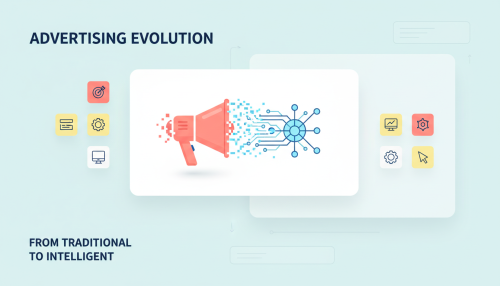
For the past few months, every advertiser is reaching the same conclusion: the old recipes no longer work. Finely targeted audiences are running out of steam, lookalike audiences are disappointing, and formerly profitable campaigns are starting to drift without apparent reason. Many conclude that Meta is in the process of sabotaging Facebook advertising in favour of automation.
The reality is more nuanced. Meta is not abandoning traditional advertising: it is shifting its centre of gravity. The performance lever is no longer targeting, it has moved to the side of creative and signal quality. Those who have understood this are getting better results than before. The others have the impression that the platform is abandoning them.
Here is what has really changed, and how to adapt your campaigns.
Key takeaways from this article
- Andromeda, Meta’s AI engine, has been fully deployed since late 2025 and is the default behaviour in 2026.
- Advertising creative has become the real targeting: it is what determines who sees your ad.
- Manual targeting has not disappeared, but over-segmenting now slows down the algorithm.
- Advantage+ is the default audience mode for sales and lead generation objectives.
- Automation creates a blind spot: without exclusions, AI favours your existing customers and artificially inflates ROAS.
What Has Really Changed on Facebook Ads
The shift has a name: Andromeda. Announced at the end of 2024 and designed with NVIDIA, this engine was deployed across virtually all objectives and placements during 2025. In 2026, it is the default operation of advertising campaigns on Facebook, Instagram and Messenger.
The change is structural. The old system sought which audience matched a given ad. The new one does the reverse: for each user, it scans tens of thousands of candidate ads and selects the one most likely to resonate, by directly analysing the content of the creative. The targeting signal is no longer found in the audience segment defined upstream, but in the ad itself.
Definition: Andromeda
Andromeda is Meta’s advertising retrieval engine, powered by artificial intelligence. It intervenes at the very first stage of delivery: pre-selecting, from among millions of ads, those that deserve to enter the auction for a given user. Other components then take over, notably GEM for ranking the retained ads.
No, Meta is Not Abandoning Advertising: It is Shifting Your Levers
Talking of abandonment would be a misreading. Meta has never invested so much in its advertising network: the platform claims more than 3 billion monthly active users and remains the main acquisition lever in B2C, e-commerce and lead generation. What Meta is abandoning is not advertising, it is manual micro-targeting.
The reason is as much technical as regulatory. After restrictions on user tracking, interest and demographic data signals weakened considerably. Meta therefore rebuilt its engine around behavioural signals and creative content, which are far richer and more stable. Your role as an advertiser does not disappear: it shifts towards strategy, creative and data quality, exactly as on Google Ads with Performance Max.
Before and After Andromeda
|
Lever |
Before (up to 2024) |
In 2026, with Andromeda |
|---|---|---|
|
Targeting |
Stacked interests, lookalike audiences |
Broad audience, AI explores |
|
Creative |
2 to 3 ads per campaign |
15 to 20 genuinely different variations |
|
Structure |
Numerous campaigns and ad sets |
Consolidated accounts, densified signal |
|
Differentiation |
Who targets best |
Who creates best |
|
Data |
Pixel alone |
Pixel and Conversions API together |
Audit, creative strategy and ongoing optimization. We manage your Facebook Ads to leverage Andromeda and generate real ROAS.
Creative Has Become the New Targeting
This is the most counter-intuitive principle to internalise. Andromeda analyses your visuals, videos and headlines to decide who to show them to. Two advertisers targeting the same audience with the same budget will obtain radically different results if one delivers mediocre creatives and the other a rich and varied portfolio.
Meta’s data supports this: moving from 5 to 20 creatives in an Advantage+ campaign can improve advertising return on investment by 15 to 32% and reduce the cost per acquisition by 9 to 28%. Be careful, however, of the similarity trap: twenty minor variations of the same visual are perceived as a single ad by the engine. It is the diversity of angles, formats and headlines that counts, not the raw volume. Our Facebook advertising examples illustrate this logic well.
How to Adapt Your Facebook Ads Campaigns in 2026?
Here are the adjustments that really make a difference on an account, whatever your sector.
- Give targeting room to breathe: favour a broad audience or Advantage+ suggestions. Over-restricting raises CPM and slows down learning.
- Consolidate your structure: fewer campaigns and ad sets. Fragmenting the conversion volume fragments the algorithm’s learning.
- Feed the engine with creatives: aim for around fifteen genuinely distinct variations, varying headlines, formats and social proof.
- Make your signals reliable: run the Facebook pixel and the Conversions API in parallel. Without clean data, AI optimises on fragile foundations.
- Set exclusions: recent customers, active buyers, already-converted visitors. This is the indispensable safeguard, we return to it below.
- Refresh regularly: a rise in CPM is the first signal of creative fatigue. Iterate every two to three weeks.
The Limits of Automation That Are Rarely Told to You
Enthusiasm for AI masks two blind spots we regularly observe on the accounts we audit.
The first is the bubble effect. The algorithm seeks to maximise immediate conversion. Without exclusions, it broadcasts massively towards the most reactive profiles: former customers, recent buyers, warm visitors. The return on investment displayed in the ads manager appears excellent, while the acquisition of new customers slows down. A flattering ROAS can therefore mask stalled growth.
The second is the budget threshold. AI needs volume to learn quickly. Below approximately €1,000 in monthly spend, the algorithm often lacks conversions to stabilise. A small organisation therefore has every interest in concentrating its resources rather than dispersing an already limited budget. Our benchmarks on the cost of a Facebook Ads campaign help situate the level.
Doko, Your Facebook Ads Partner in Lyon
Doko is a human-scale Lyon-based webmarketing agency, based in La Mulatière. A Google Premier Partner, we manage daily campaigns on Facebook Ads and Meta Ads for businesses across all sectors, from conversion tracking setup to creative strategy.
Our conviction: automation does not eliminate the craft, it raises the level of expertise required. Structuring an account, producing creatives that feed the algorithm and setting the right safeguards remains human work. We work on real data and we adjust continuously, without promising miracles. Want to take stock of your campaigns? Let’s talk.
FAQ: Facebook Ads and AI in 2026
Is Manual Targeting Dead on Facebook Ads?
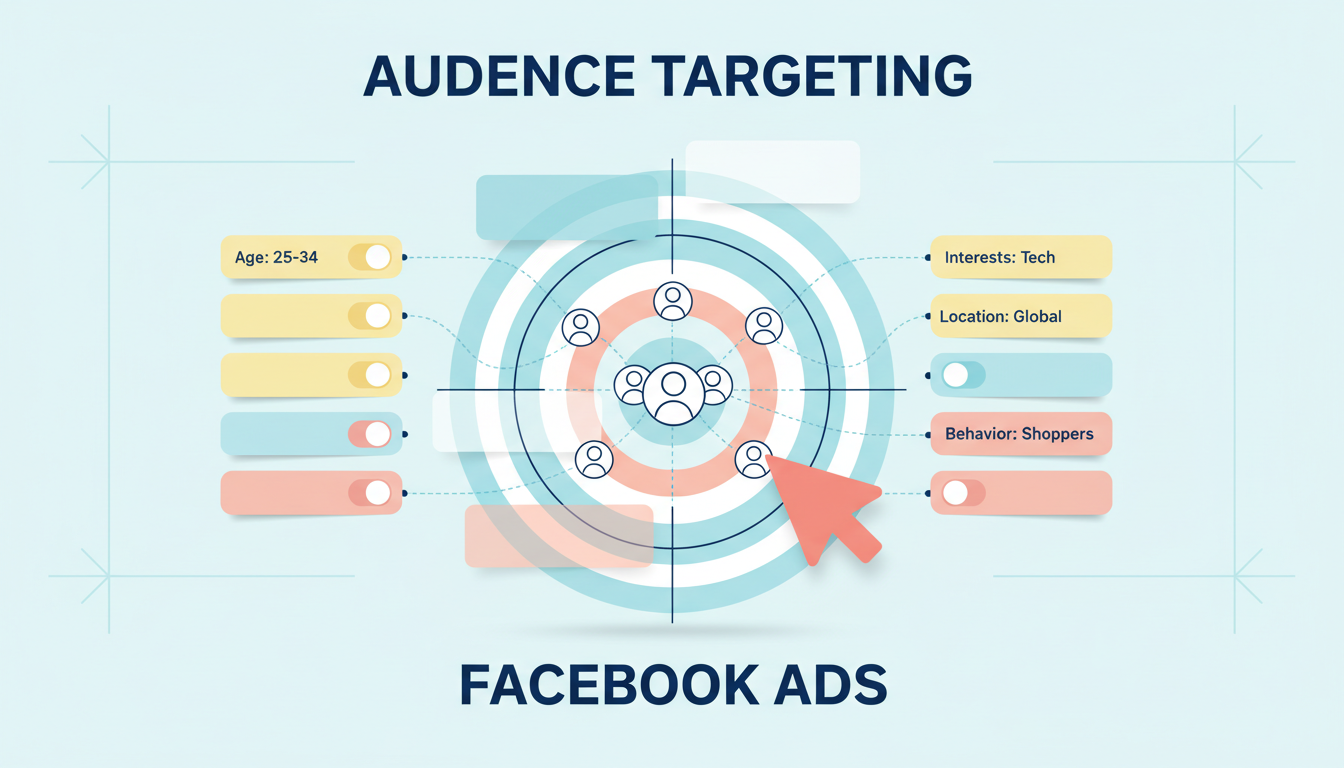
No, it remains possible to deactivate Advantage+ and target manually. But over-segmenting an audience limits the signals the algorithm can exploit, which raises CPM and slows down learning. Exclusions, however, remain useful.
Do Lookalike Audiences Still Serve a Purpose?
They have lost most of their value. Andromeda’s behavioural signals go beyond what a seed audience can define. They can still help a very young account with little conversion history, but as a temporary scaffold.
How Many Creatives Are Needed per Campaign?
Count on around fifteen genuinely different variations. The criterion is not the number but the diversity: several minor variations of the same visual are interpreted as a single ad by the engine.
Should You Switch to Advantage+ Shopping?
For most e-commerce businesses with a significant budget, yes: this format displays a noticeably lower cost per acquisition than manual campaigns. It does however require a sufficient creative portfolio to feed the algorithm.
Is Facebook Ads Still Profitable in 2026?
Yes, provided you accept the new rules. Advertisers who invest in creative and data quality often get better results than before. Those who persist with 2022 methods observe a continuous deterioration.