Online Advertising With No Sales: Why Isn’t Your Strategy Converting?
You invest a serious advertising budget every month. The clicks come in, the impressions stack up. But the sales don’t follow. This scenario is neither rare nor inevitable. According to a WordStream study, 76% of Google Ads budgets go up in smoke due to poor targeting or a badly designed landing page.
Online advertising with no sales is almost always a symptom of misalignment between what you are running and what your target audience is actually looking for. It is not a question of budget. It is a question of strategy. At Doko, a Lyon-based agency and Google Premier Partner for over 10 years, we regularly audit campaigns that perform technically but fail commercially. The diagnosis is almost always the same: you are optimising the click, not the value.
Key Takeaways
- Online advertising with no sales signals a structural problem, not a budgetary one.
- Unqualified traffic is expensive and does not convert: targeting is your primary lever.
- The landing page is often the weakest link in your conversion funnel.
- Google Ads and Meta Ads require rigorous cost-per-acquisition (CPA) tracking to be profitable.
- Generative search (GEO) demands a more qualitative approach to digital advertising.
- Delegating to an expert agency means moving from “clicks” to “return on investment”.
Why Are Your Ad Campaigns Not Generating Results?
The Unqualified Traffic Trap: The Cost of Useless Visibility
Generating traffic is not generating business. This is the most widespread confusion among advertisers facing online advertising with no sales. A high click-through rate with a 0.2% conversion rate does not mean your campaign is working. It means you are paying for visits that bring you nothing.
The problem often stems from overly broad targeting. On Google Ads, broad-match keywords attract intentions that are far removed from your offer. On Meta Ads, a poorly defined lookalike audience can expose you to thousands of users who will never buy. Every unqualified click is a spend with no return.
Qualified traffic: a visitor whose search intent precisely matches your offer. They arrive on your site with an identified need, at the right moment in the buying cycle. This is the essential condition for a controlled cost per acquisition.
A cost per acquisition (CPA) that spirals out of control is the first warning sign. If you are paying €80 for a lead worth €50 to your sales team, your acquisition strategy is loss-making before you have even closed a sale. And no budget adjustment will fix that.
A Marketing Promise Disconnected from Customer Need
Your ad promises one thing, your website delivers another. This is the most common case of online advertising with no sales. The user clicks on “Request a free quote” and lands on a generic page presenting your 15 services. The frustration is immediate. The bounce rate is too.
Message-to-offer alignment is non-negotiable. Every ad must lead to a page that responds exactly to the promise made. If you are targeting “SME invoicing software”, your landing page must speak to SMEs, about invoicing, and in concrete terms. Not about your company history.
The message must also match the purchasing stage of the prospect. A user in the discovery phase will not respond to an immediate purchase offer. A B2B decision-maker in the comparison phase needs social proof, not a pop-up form.
The Conversion Funnel: Where Are You Losing Your Prospects?
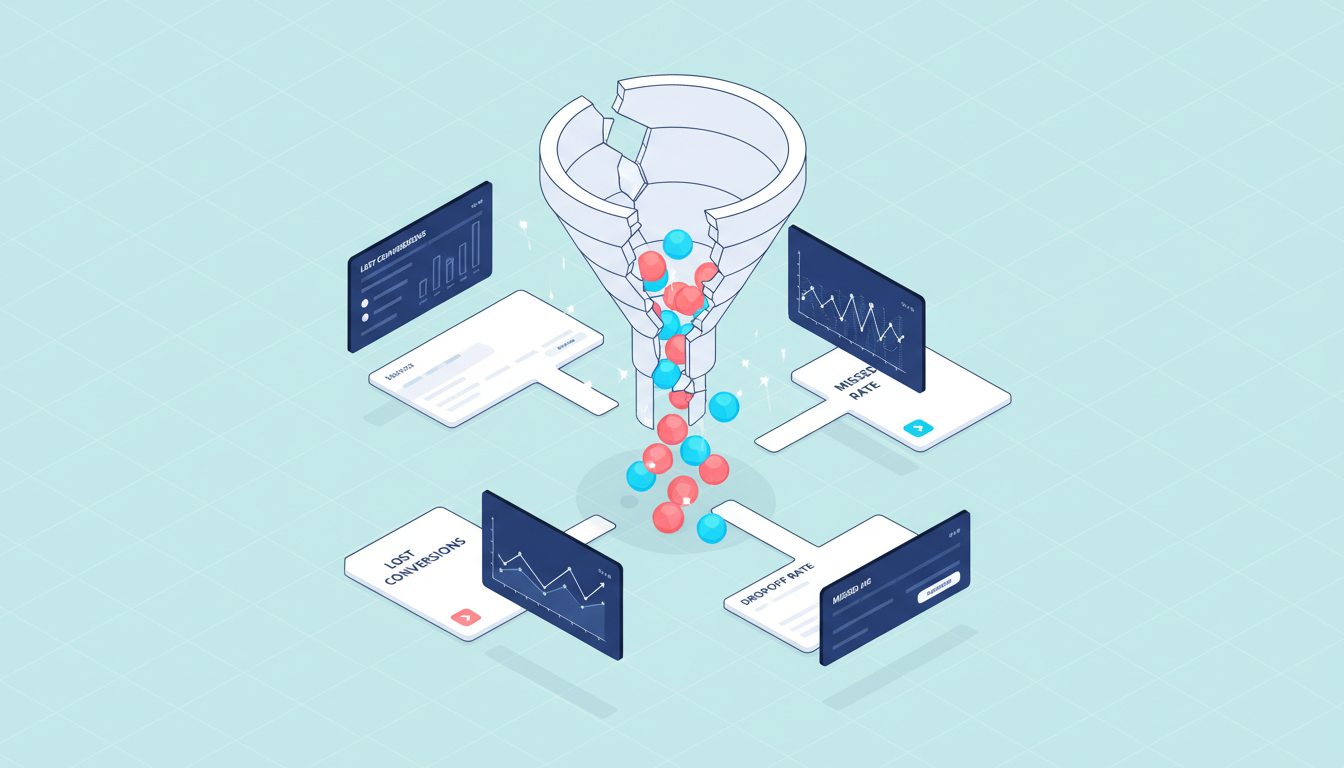
A B2B sales funnel has several stages. Each one can be a leak point. Most advertisers analyse the top of the funnel (click-through rate, cost per click) and ignore everything else.
Here are the most common break points:
- The ad itself: too generic a message, no clear call to action, no differentiation from competitors.
- The above-the-fold area of the landing page: if the main promise does not appear above the fold, the prospect leaves in under 8 seconds.
- The contact form: too long, too intrusive, or positioned after too much content. Every additional field reduces the conversion rate.
- The absence of reassurance: no customer reviews, no certification, no guarantee. In B2B, trust is built before the act of purchase.
- Post-click follow-up: no retargeting, no automated email. A prospect who does not buy on the first day is lost without a follow-up.
Every break point has a cost. Identifying which one is causing the leak is precisely where a structured audit comes in.
The Doko Diagnosis: Auditing Your Google Ads and Meta Ads Campaigns
Keyword and Audience Relevance Analysis
An audit always begins with intent analysis. At Doko, we first map the actual search terms triggering your ads, not just the keywords you have set up. The difference can sometimes be stark.
Three levels are examined: the relevance of keywords in relation to the offer, the consistency of Meta audiences with your actual buyer persona, and the Google Quality Score which directly determines your cost per click. A low Quality Score is simple: you are paying more than your competitors for exactly the same positions.
On Google Ads, a search terms report regularly reveals that 30 to 40% of spend goes on queries unrelated to the offer. Correctly configured negative keywords can reduce budget waste by several hundred euros per month without touching actual performance.
On Meta Ads, audience analysis goes beyond demographics. Interests, purchasing behaviours, lookalike audiences: every parameter must be validated by conversion data, not by intuition.
Landing Pages: Optimising the User Experience for Conversion
The landing page is the most underestimated asset in an advertising campaign. Most advertisers spend 90% of their time on the ad and 10% on the destination page. The result: qualified traffic that arrives at a wall and leaves.
Here are the criteria a Doko audit systematically checks:
| Criterion | Impact on conversion | Optimisation priority |
|---|---|---|
| Message consistency between ad and page H1 | Very high | Critical |
| Load time (< 2.5 sec) | High | High |
| Call to action visible without scrolling | High | High |
| Social proof (reviews, client logos) | Medium to high (B2B) | High |
| Short form (3–5 fields max) | Medium | Medium |
| Optimised mobile version | High (depending on target) | High |
| Trust elements (certifications, guarantees) | Medium to high | Medium |
A Doko client in B2B consulting saw their conversion rate go from 1.1% to 4.3% in six weeks, without touching their advertising budget. Only the landing page had changed. The ad was already working. That is often where the problem lies.
The Impact of Algorithms and Generative Search (GEO) on Your Sales
Advertising algorithms are changing fast. Google Performance Max, Meta Advantage+, automated bidding: these tools promise to simplify management, but they require quality data to function. A poorly fed algorithm optimises in the wrong direction. And it does so very efficiently.
Generative search (GEO) is also changing purchasing behaviours. Users get direct answers before even clicking on an ad. Your campaigns must therefore capture more precise intentions, further down the funnel. Generic queries cost more for less solid results.
Advertising profitability in this context requires a qualitative approach: highly relevant messages, refined audiences, conversion content aligned with algorithmic signals. It is no longer a question of volume, it is a question of precision.
At Doko, this reality translates directly into how we structure campaigns: very tight thematic ad groups, exact-match keywords for high commercial-intent queries, and active monitoring of search term reports to eliminate parasitic intent. Precision is a daily management choice.
Targeting audit, landing pages and conversion funnel: we identify where you’re losing money and fix it.
Strategies to Turn Your Budget into Lasting ROI
Moving from “Click” to “Value”: Tracking as Your Compass
Without reliable tracking, you are flying blind. This is the first reality to accept in order to escape online advertising with no sales. Measuring only clicks means confusing activity with performance.
A high-performing tracking setup integrates the reporting of actual conversions (forms, calls, purchases) into Google Ads and Meta Ads, the monitoring of conversion value — not just their number — and an attribution model that reflects the actual purchasing journey of your B2B client.
At Doko, we systematically configure Google Analytics 4, Enhanced Conversions tracking and Meta Pixel events. The goal: give the algorithms the right signals so they optimise towards your real commercial objectives, not vanity metrics.
The attribution model is often the poor relation of configuration. Last-click attribution systematically undervalues brand awareness and retargeting campaigns, which nevertheless play a decisive role in the B2B journey. Switching to a data-driven or position-based model radically changes how performance is read, and therefore investment decisions.
Intelligent Retargeting: Winning Back Undecided Prospects
A prospect who visits your site and leaves is not lost. But without retargeting, you let 97% of your visitors go without any follow-up attempt. In B2B, the decision cycle often lasts several weeks. Advertising pressure must be sustained over that duration.
Intelligent retargeting is not about running the same ad on a loop. It is about adapting the message to observed behaviour. A visitor who has consulted your pricing page receives a customer testimonial ad. Someone who has downloaded a guide receives an invitation to a meeting. The message follows the prospect wherever they are in their journey.
This approach mechanically reduces the cost per acquisition by reactivating existing purchase intent rather than constantly seeking out new cold prospects.
The most effective retargeting sequences combine several formats: a display reminder ad, a short customer testimonial video, then a direct offer with a deadline. In B2B, three to five additional exposures after the first visit are often enough to tip an undecided prospect. Without retargeting, you abandon the lead before the close.
A/B Testing: The Method for Validating and Scaling Your Performance
A/B testing is the only way to validate an advertising hypothesis without bias. Changing two variables at the same time will never tell you which one produced the result. Yet this is the most common mistake.
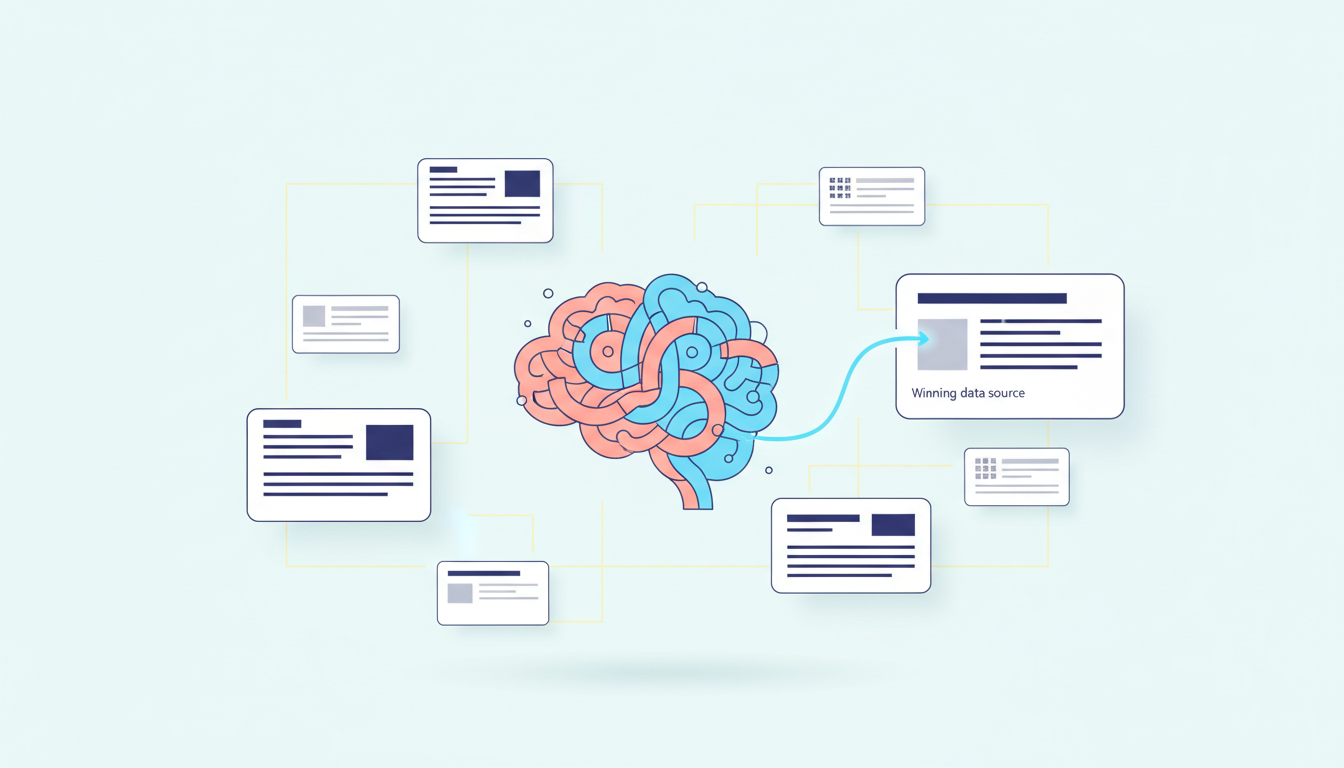
A rigorous A/B testing strategy works as follows: isolate one variable (the ad headline, the image, the call to action), define a minimum delivery volume to reach statistical significance, and roll out the winner before moving on to the next variable.
This iterative process allows you to progressively scale performance. A click-through rate improved by 0.5 points on a €5,000/month campaign can represent dozens of additional leads per quarter. The gains accumulate.
One last point that is often overlooked: A/B testing must also apply to the landing page, not just the ad. Test two versions of the main headline, two formulations of the call to action, or two form layouts. The fastest gains are often found there, rather than in the campaign settings themselves.
The Role of an Expert Agency in Optimising Your Performance
Why Delegate the Management of Your Ad Campaigns?
Managing Google Ads and Meta Ads campaigns requires technical expertise, constant monitoring of platform developments, and daily management time. It is not a part-time job. It is a profession in its own right.
Delegating to Doko means accessing a Google Premier Partner-certified team for whom this is their sole mission. Our experts monitor campaigns daily, adjust bids, detect cost per acquisition drift and test continuously. You receive clear, results-oriented reports: leads generated, cost per lead, conversion rate progression.
For a marketing director or business owner, the challenge is not to understand how to configure a campaign. It is to understand why your budget is — or is not — generating revenue. That is precisely what we provide.
Beyond Media Buying: The SEO/GEO and SEA Synergy
Online advertising with no sales is often compounded by a lack of coherence between digital levers. Google Ads works better when SEO reinforces domain credibility. SEO gains momentum when SEA validates converting keywords ahead of organic positioning.
At Doko, we design integrated digital strategies. The SEO and SEA teams work together: SEA conversion data feeds the SEO content strategy, the best-ranking organic pages become campaign landing pages. The overall return on investment exceeds the sum of its parts.
Generative search reinforces this logic. A brand well positioned in Google’s generated responses benefits from a credibility halo that improves the click-through and conversion rate on its paid ads. SEO and SEA are no longer in opposition. They reinforce each other.
Your Google Ads or Meta Ads campaigns are not delivering the expected results?
Doko audits your advertising campaigns to precisely identify the break points in your conversion funnel. Contact our experts for a no-commitment diagnosis.
FAQ: Your Questions About Optimising Your Online Sales
Why do my ads get clicks but zero sales?
The problem most commonly stems from a misalignment between the ad and the landing page, or from overly broad targeting that attracts visitors with no real purchase intent. An audit precisely identifies the break point in your conversion funnel.
What is the minimum budget to hope for sales?
There is no fixed amount. The minimum budget depends on your target cost per acquisition and your margin per sale. A €500/month campaign can be profitable if your target CPA is €30 and your average basket is €200. Doko analyses your business model before sizing a budget.
Is AI and generative search killing my ads?
No. They require a more qualitative approach, centred on relevance and GEO (Generative Engine Optimization). Generic ads lose effectiveness, but highly targeted campaigns with precise messages and optimised landing pages see their performance improve.
How long before seeing results from Ads?
Google Ads and Meta Ads go through a learning phase of 2 to 4 weeks during which the algorithms collect data. The first usable results generally appear between 6 and 8 weeks. The scaling phase then begins, once the volume of conversions allows for fine-tuned optimisation.
Should I prioritise Google Ads or Meta Ads?
It depends on your target and your sales cycle. Google Ads captures active purchase intent, Meta Ads creates demand among targeted audiences. In B2B, Google is often more direct. Doko analyses your complete ecosystem to choose the most profitable lever, or to combine both.